


Laundry and household linen
Linen is the first thing to break down when the season speeds up. It has to run as a flow, with stock in hand — never in the flat's own machine between two guests.
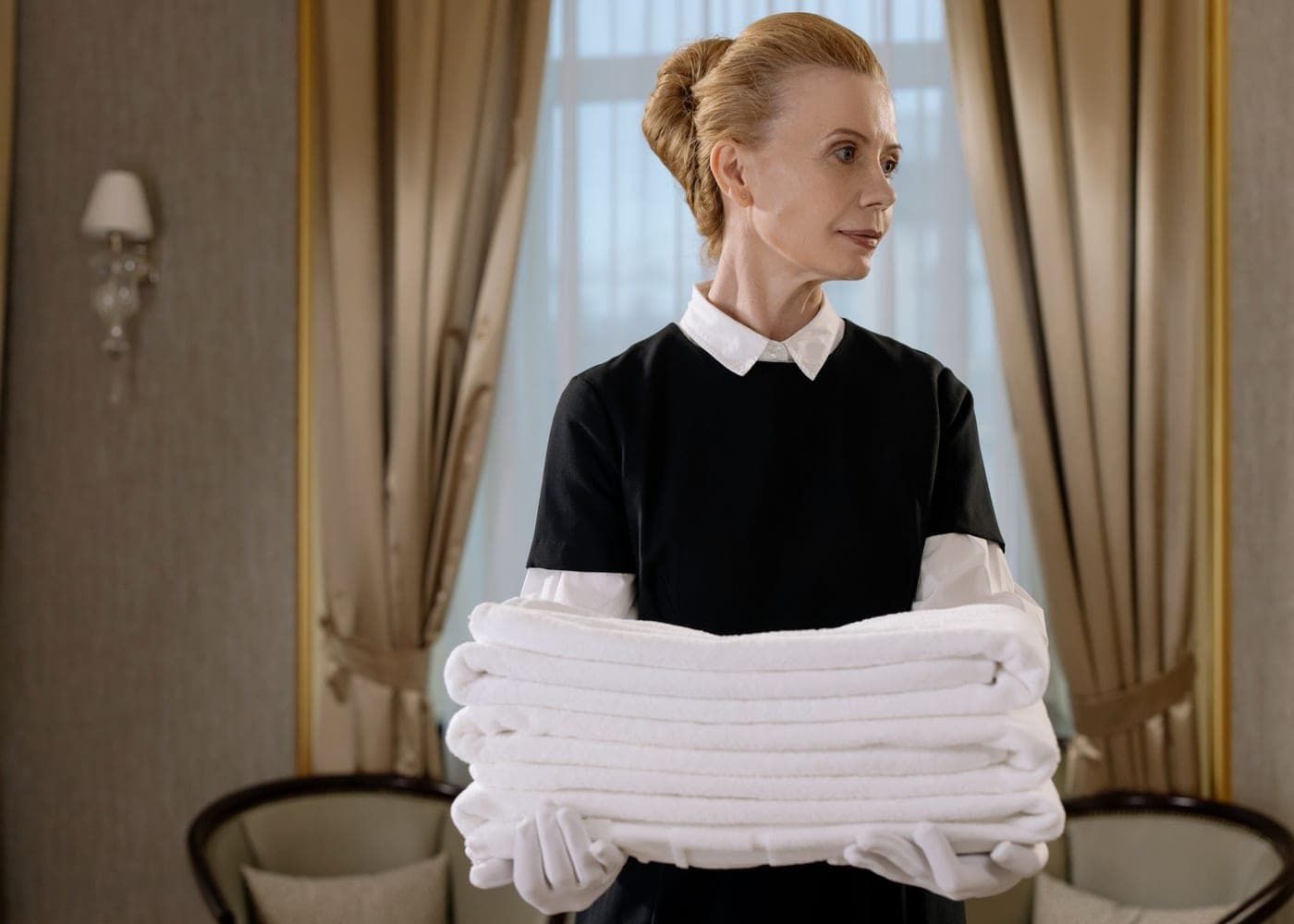
Stock that rotates, not a machine that races
Washing the sheets on site between two stays is the most common false good idea. A cycle plus drying overruns the window available between a departure and an arrival, and a single rainy day is enough to derail the whole calendar. The linen has to leave, and a clean set has to be waiting in the cupboard already.
We work on a minimum of two complete sets per bed, three at peak season: sheets, duvet covers, pillowcases, bath and hand towels, bath mats, tea towels. That stock is built once, then topped up as items wear out.
Collected linen is washed hot, dried and pressed, then checked piece by piece. Anything permanently stained, yellowed or fraying is taken out of circulation and reported to you: a grey sheet tells the guest a story that the listing photograph cannot undo.
Putting the linen back is part of the service. Beds are made up with the clean set during the cleaning, towels are laid out per bed, and the remaining stock is stored in a fixed place so that whoever comes next finds it without hunting.

Questions about linen
Do I have to buy the linen myself?
The linen can stay yours: we look after it and keep it rotating. If your stock is too small to absorb the turnovers, we tell you exactly what is missing and you remain free to buy it yourself or leave it to us.
How are stubborn stains treated?
Wine, make-up or sun cream is pre-treated before washing, which saves most pieces. When the fibre is permanently marked, the piece leaves the rotation rather than returning to a bed: we tell you, and the replacement is decided together.
Is linen from several flats mixed together?
No. Each flat has its own batch, labelled and tracked. That avoids inventories that cannot be untangled at the end of the season, and lets every owner get back exactly what belongs to them.